
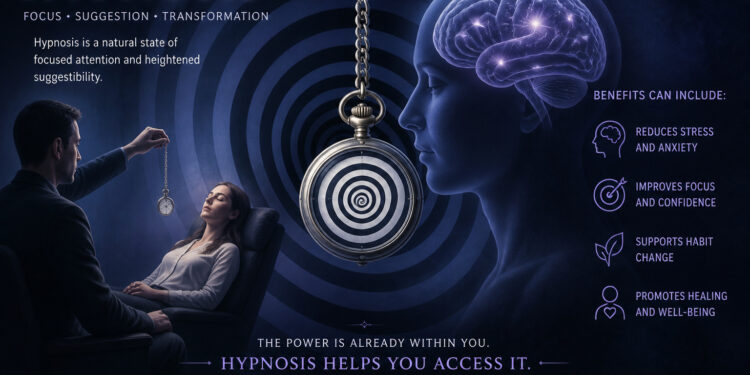
Hypnosis is a guided state of focused attention and relaxation that can be used to help people explore thoughts, habits, and patterns of behavior. Although hypnosis is sometimes portrayed as mysterious or as a loss of control, people generally remain aware of their surroundings and can choose how they respond during a session.
When provided by a qualified professional and used appropriately, hypnosis may be a useful complementary approach for certain personal and wellness goals. The experience varies from person to person, and hypnosis should not be presented as a cure-all or a replacement for appropriate medical or mental-health care.
Promotes Deep Relaxation
One of the commonly reported benefits of hypnosis is its emphasis on relaxation. A session may involve calm breathing, focused attention, and guided imagery. These techniques can encourage a person to slow down, reduce distractions, and become more aware of physical and mental tension.
Learning relaxation and focused-attention techniques may also give people strategies they can practice outside of hypnosis sessions.
Supports Positive Habit Change
Hypnosis is sometimes used as part of efforts to change unwanted habits and develop healthier routines. By focusing attention on personal goals and reinforcing desired behaviors, a hypnosis session can help some people think differently about the triggers, choices, and routines associated with a habit.
Results depend on the individual, the goal, and the broader approach being used. Hypnosis works best when it is combined with realistic goals and active participation rather than viewed as something that makes change happen automatically.
May Help With Stress Management
Because hypnosis often incorporates relaxation and focused attention, some people use it as one component of a stress-management routine. Guided imagery and suggestions can provide a structured opportunity to step away from everyday distractions and concentrate on calming thoughts and sensations.
People experiencing persistent or severe stress should consider discussing their symptoms with an appropriate healthcare or mental-health professional.
Can Support Confidence and Self-Focus
Hypnosis may also be used to help people focus on personal strengths, goals, and constructive patterns of thinking. Suggestions centered on confidence, motivation, preparation, or performance can be incorporated into a session.
For example, someone preparing for a presentation, competition, examination, or other challenging situation may use guided visualization to mentally rehearse a calm and focused response.
May Complement Pain-Management Strategies
Hypnosis has also been studied as a complementary technique for managing certain types of pain. Some people may use hypnotic techniques alongside conventional care to develop relaxation skills and change how they focus on or respond to discomfort.
Pain can have many possible causes, so hypnosis should not be used to delay diagnosis or treatment of an unexplained or serious medical problem.
Can Encourage Mindfulness and Self-Awareness
A hypnosis session can involve sustained attention to thoughts, feelings, physical sensations, and imagery. This focused experience may encourage greater awareness of personal reactions and patterns.
That increased awareness can be useful when someone is working toward a specific personal goal, especially when paired with practical strategies for maintaining change in everyday life.
Hypnosis Is a Collaborative Experience
A common misconception is that hypnosis involves giving up control. In practice, a person undergoing hypnosis generally remains an active participant. A hypnotist provides guidance and suggestions, while the individual decides whether and how to engage with them.
Not everyone responds to hypnosis in the same way. Expectations, comfort level, willingness to participate, and the quality of the practitioner-client relationship can all influence the experience.
Choosing Hypnosis Responsibly
If you are considering hypnosis for a health, behavioral, or emotional concern, look for a qualified practitioner whose training and scope of practice are appropriate for your needs. Ask what the session involves, what outcomes are realistic, and how hypnosis fits alongside other forms of care.
Hypnosis can be a useful complementary tool for some people, but it is not appropriate for every situation. Medical conditions, significant psychological symptoms, or other serious concerns should be evaluated by qualified healthcare professionals.
Conclusion
The potential benefits of hypnosis center on focused attention, relaxation, guided imagery, and goal-oriented suggestions. Depending on the individual and the purpose of the session, these techniques may support relaxation, habit-change efforts, stress management, confidence, self-awareness, and certain pain-management strategies.
The most important factor is maintaining realistic expectations. Hypnosis is not magic and does not remove a person’s ability to make choices. Used responsibly and, when appropriate, alongside conventional care, it can be one tool people explore as they work toward personal wellness and behavioral goals.